
Settlement Shows Why Understanding Your Military Leave Rights Matters
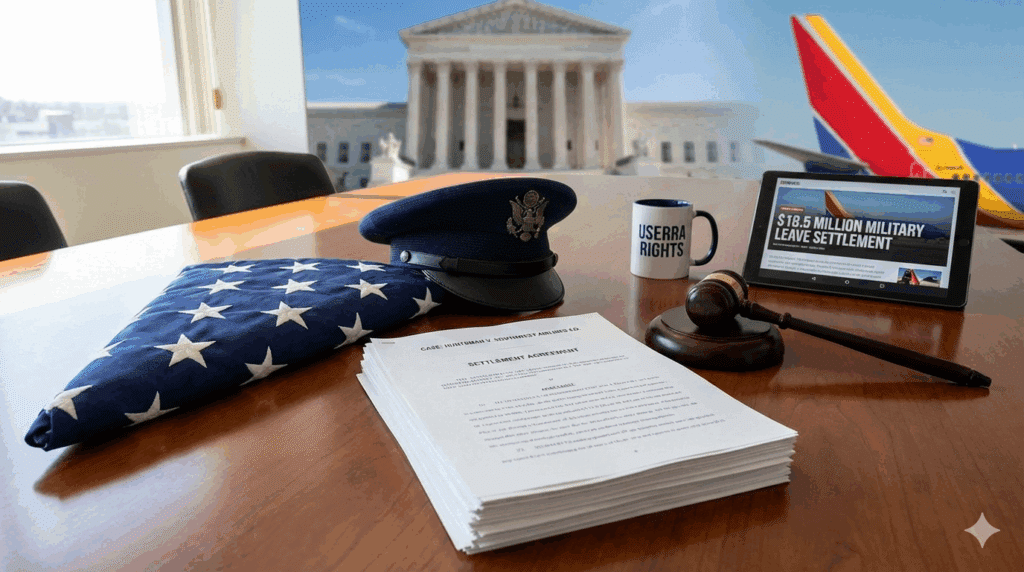
A class action lawsuit on behalf of Southwest Airlines employees has resulted in a stunning $18.5 million settlement that received preliminary approval from a federal court in California last month. The case, Huntsman v. Southwest Airlines Co., involved Southwest’s failure to pay employees taking short-term military leave—even though it paid wages to employees who took comparable non-military leaves.
The employees argued this violated the Uniformed Services Employment and Reemployment Rights Act (USERRA), a federal law providing rights and protections for servicemembers in their civilian jobs. The court did not decide liability. The parties have instead agreed to the proposed settlement, which is subject to court approval.
As the settlement awaits final court approval later this year, in May 2026, it highlights important questions about pay and military leave.
Must Your Employer Pay You For Your Time On Military Leave?
The short answer: It depends—equality is crucial.
USERRA does not provide you with an automatic right to wages or salary during military leave. However, the law does require equal treatment. Let’s examine what that means.
The law requires your employer to give you the same benefits during military leave that the employer gives employees with similar seniority, status, and pay when they take a comparable non-military leave. If similar employees receive salary or wages for non-military leave, you generally would be entitled to pay while on military leave under USERRA if your military leave is comparable.
What makes leaves comparable? Courts look at several factors:
- Duration of the leave of absence
- Purpose of the leave of absence
- Employee’s ability to control when to take leave
Courts may also consider other factors. However, duration, purpose, and control transcend any other factor in significance. Courts generally consider duration to be the most significant factor.
Example: In the Southwest case, the employees claimed that their unpaid “short-term” military leaves—lasting 14 or fewer days—were comparable to paid leaves taken for jury duty, bereavement, or sickness. The employees argued that jury duty, sick leave, and bereavement leave were comparable to short-term military leave in terms of duration and typically being involuntary. Employees further contended that the purposes of jury duty and short-term military leave were similar: public service for the benefit of society.
Keep in mind that what counts as comparable leave depends on your specific situation. The specific facts matter.
Can You Use Your Own Paid Time Off During Military Leave?
Here’s an important right many employees don’t know about: USERRA gives you the option to use your accrued vacation, annual, or similar paid leave during military service.
The choice is yours, not the employer’s. Your employer violates USERRA if it forces you to use your accrued leave time for military duty.
Maybe you want to use vacation days to supplement your military compensation. Or maybe you’d rather save those days to use when you return to work. Either way, USERRA grants flexibility. It’s your decision—not something your employer can require.
Special Rules for Florida Public Employees
If you work for the state or another government employer in Florida, you may have more pay rights while on military leave.
Under Florida law, public employees get up to 240 hours of paid leave annually for reserve and National Guard training. Public employees are also entitled to pay for the first 30 days of periods of active federal service lasting 90 or more consecutive days.
Additionally, public employees who are members of the Florida National Guard (FNG) or the Florida State Guard (FSG) are entitled to up to 30 days of paid leave for each event in which they perform active service in the FNG or FSG.
These Florida laws give public employees guaranteed paid leave beyond what USERRA requires.
What Should You Do?
If you’re a servicemember (or planning to join the military), here are some practical steps:
Before taking military leave:
- Review your employer’s leave policies
- Check if your employer pays for other types of leave, like jury duty, administrative leave, or bereavement
- Ask HR about military leave pay policies
- Understand your rights about using your own paid time off
If you think your rights were violated:
- Document everything
- Compare how your employer treats military leave versus other leaves
- Note if your employer forced you to use vacation or similar leave time for military duty
- Contact an employment attorney who handles USERRA cases
- Consider filing a complaint with the Department of Labor’s Veterans’ Employment and Training Service (VETS)
The Bottom Line
While USERRA doesn’t guarantee paid military leave, it does require equal treatment. If your employer pays other employees for comparable non-military leaves, you may be entitled to the same benefit while on military leave. And remember: the decision whether to use your own paid time off during military service belongs to you alone.
The Southwest settlement shows that employers can face serious consequences for treating military leave unfairly. Know your rights, document your situation, and don’t hesitate to speak up if something doesn’t seem right.
If you are having issues with USERRA or have further questions, consult with the experienced employment lawyers at Sass Law Firm.